I have been watching and consuming productivity content for years, and I’ve tried a lot of different planning methods. Today, I’ll be reviewing what I’ve found works for me recently – a strategy from Ali Abdaal’s Trident Calendar System known as the Ideal Week method.
💡 What is the Ideal Week Method?
The Ideal Week Method is simple, and tasks you with creating a template for your weekly planning. First things first, start off with a blank, brand-new calendar. You can do this on paper or in your preferred calendar application – I recommend Google Calendar for a great, easy-to-use & free option and Fantastical (paid, iOS/MacOS) for those looking for a little more power.
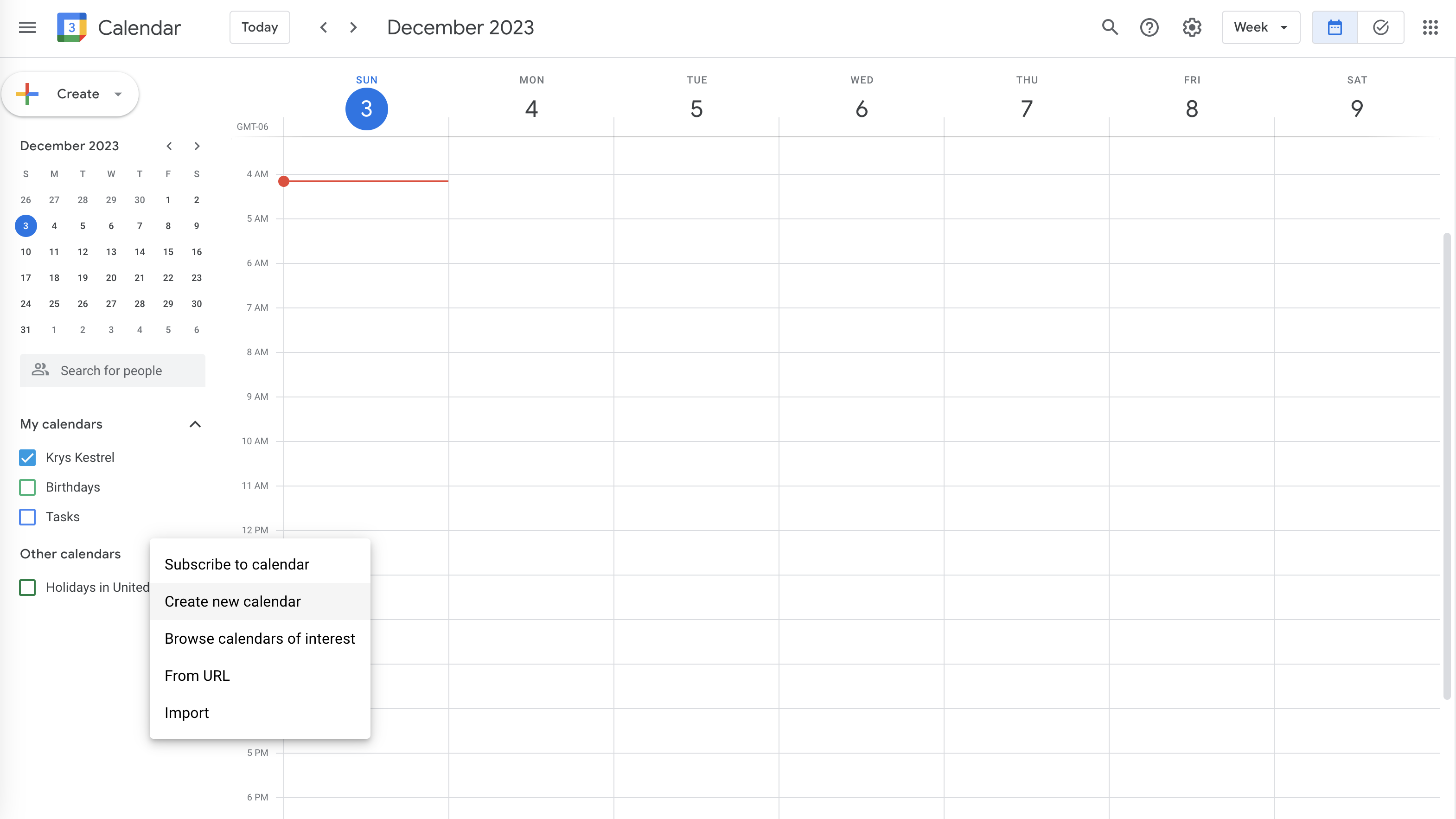
Once you have your blank calendar, go ahead and start filling in what an ideal week in your life might look like. While it’s important to set goals, remember to be realistic in your planning. Start with your prior commitments, such as work or education, and fill in the “free” time with different time blocks unique to your current priorities and goals.
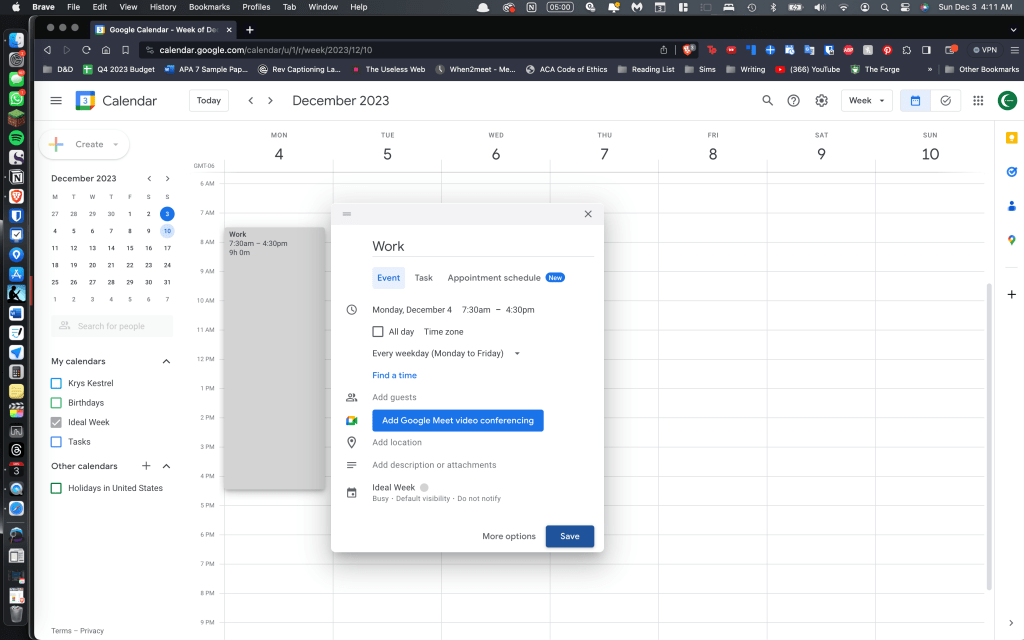
When you’re going through this process, make sure to take some time to reflect on each main category of life you’d like to put time towards right now. You are working with 168 hours total (112 waking hours), and can’t commit to everything. This is where we narrow our focus, and choose some focus areas to dedicate some of those 112 waking hours to.
Focus Area Examples:
- Work
- Cleaning/Home Maintenance
- Relationships
- Self Care
- Health
- Personal Development
- Education
While you may have different focus areas than those listed above, determine what they are and begin to think of actionable ways you can work towards improving in those areas.
For Health, you might dedicate a few times a week to working out at the gym; for Self Care, you may designate a night to yourself where you do favored activities and relax; for Relationships, you might budget in social time or a date night; the list goes on. Think of what on that list of focus areas is most important, and schedule it in first. Work your way down the priority list from there, and your ideal week will start coming together.
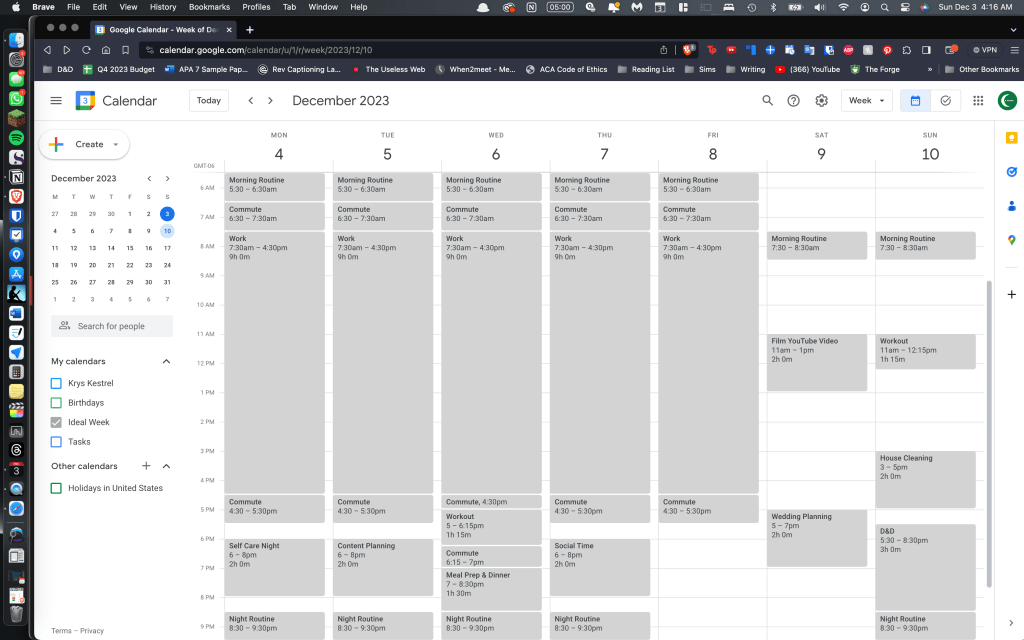
Once you’ve planned your week, try to make sure you stayed realistic and perhaps even gave yourself some wiggle room. Managing your expectations is vital to staying motivated.
Now that you have your ideal week calendar created and populated with events, use this as a part of your regular weekly planning as a blueprint. Don’t know what to do on Tuesday evening? Well, your ideal week says you wanted to do some language practice – in that case, you can fall back to your ideal week and stay consistent with the goals you aligned your blueprint with before.
🌱 Benefits of the Ideal Week Method
I particularly enjoy this planning method because it reinforces my habits and routines without much conscious decision-making. For me, that heavily reduces the friction between doing nothing and getting started or making progress on projects. Sometimes, having free time is wonderful – but the amount of choices of what to do and thoughts of what you feel like you should do can compete and make it difficult to act all. Task automation is a great way of addressing decision paralysis in your everyday life, and the Ideal Week method’s template format fits perfectly under that umbrella (Psychology Today). That’s why I like having the ideal week plan to fall back on, to make less decisions now because former me has already decided – these are the projects we are working on, this is what we want to dedicate our time towards, and even if I can’t get it done when the ideal week plan says I am now conscious of the fact that I wanted to get it done. That way, I’m far more likely to schedule in that event/task on another day of that week.
Another big impact of this planning method is that it helps build up the small wins. Motivation can easily wane when working on long-term, larger projects, making it difficult to remain motivated to complete the necessary tasks for these long-term projects. Creating this aspirational version of my week has led to the creation of a series of mini-goals that I can achieve as small wins throughout the week. Did I spend some time relaxing and reading outside on my self-care night? Awesome, that’s a win. Did I work on wedding planning on Saturday when my fiancé and I are both free? Fantastic! That’s another win. Building up these small wins builds confidence and motivation, and that can help to achieve the bigger wins (Harvard Business Review).
Finally, this has just led to me leading a healthier, more balanced life. I am more intentional about my time overall, so I find that I spend far more time learning and working on creative projects versus just sitting around being bored or feeling guilty that I’m not doing enough. By setting aside time for everything – so everything has its place – I make sure that I can really relax during my relaxation time and focus in during my scheduled working times.
💭 Final Thoughts
I encourage you to try this ideal week planning method, and take some time every month or quarter or so to reflect on whether the “ideal week” you planned still aligns with your goals. It’s easy to course correct over time and change the plan, but what’s important is that you don’t wait for the plan to be 100% perfect. Accepting that your goals, values, or ability to achieve certain goals may shift over time is part of managing realistic expectations and staying positive.
Best of luck in your weekly planning and in your testing out of this method of planning – let me know your thoughts, and check out the corresponding YouTube video to this article here.
 Krys Kestrel
Leave a comment